
Sphere in Practice
SphereSphere in Practice – a new online course
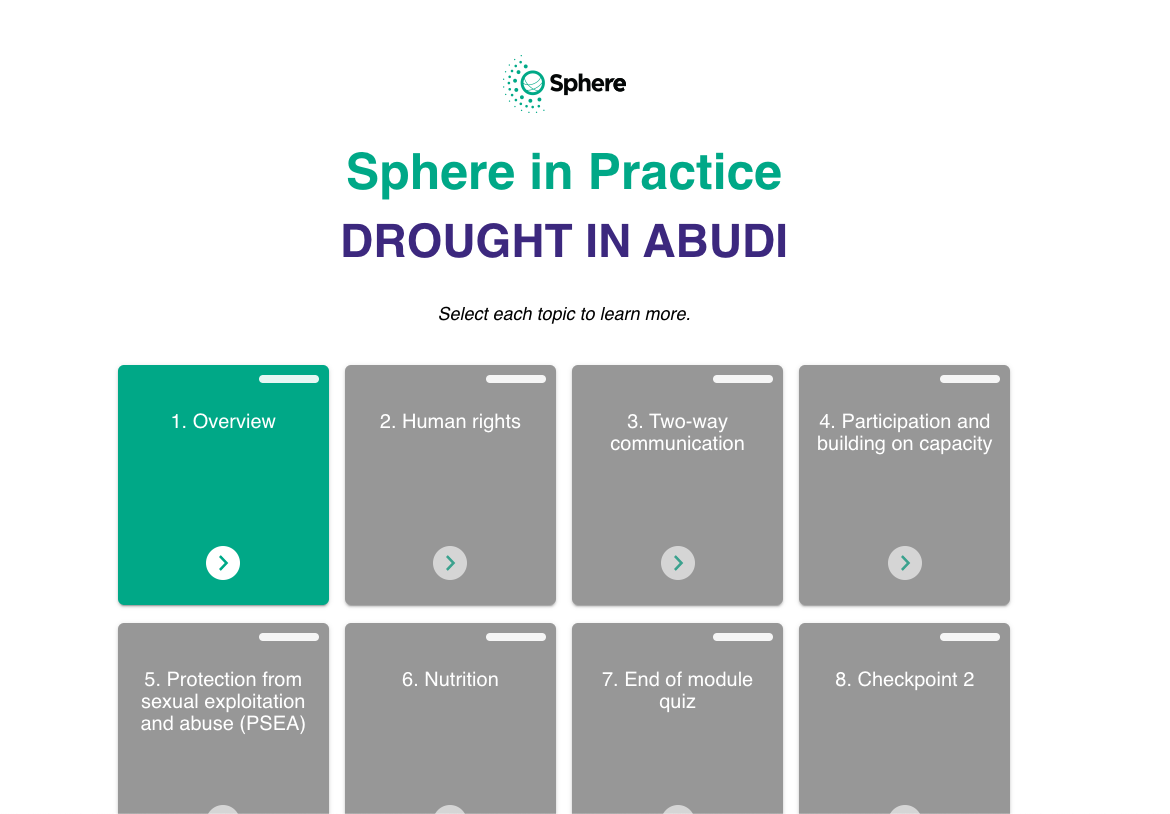
Sphere in Practice is now available as a self-paced online course in English and French. Spanish and Arabic versions are in production and will be available soon.
This new course replaces The Sphere Handbook in Action, which was accessed by over 40,000 people since release in 2013.
Sphere in Practice borrows some elements from the previous course, but most of the content is new or significantly refreshed. So, even if you already passed the old course, please don’t hesitate to study the new one.
The new course references the 2018 edition of the Sphere Handbook and includes dynamic links to the Interactive Handbook.
Compared to the old course, Sphere in Practice reflects some of the same changes between the 2011 and 2018 editions of the Sphere Handbook. For example, the course scenarios are more representative of current humanitarian crises; covering complex, protracted crises with less focus given to sudden-onset disasters compared to the old course. Similarly, a range of settlement scenarios (including urban settings) are covered with less focus on formal camp settings.
The new course has a brand-new Protection from Sexual Exploitation and Abuse (PSEA) topic, and a new section describing the critical difference between standards and targets, which must not be overlooked.
The new course has a modern feel and is consistent with Sphere’s latest brand.
The Sphere in Practice self-paced course is streamlined compared to the old one, representing around 8 to 10 hours of study. Subject to availability, the new course is available as a massive open online course (MOOC) which adds a further 8 to 10 hours of study time split between live webinars and moderated discussion forums.
By the end of this course, you will be able to:
- define the rights of people affected by crises and disasters;
- discuss the value of the Sphere principles and standards in supporting a high-quality and accountable humanitarian response;
- describe how to use the Sphere Handbook in key areas of humanitarian work including:
- accountability to affected populations (AAP), which includes participation, building on and strengthening capacities and two-way communication;
- needs and capacities assessment;
- programme design, monitoring and evaluation and coordination;
- upholding the rights, security and dignity of affected populations;
- resilience and early recovery.